Summary: I wanted to join some dots between my work on reflective relational practice and my work on the political economy of corruption with Kathy Bain and colleagues at SOAS-ACE. I draw on the Relational State Capacity paper by Dan Honig, Mekhala Krishnamurthy and Rahul Karnamadakala Sharma. It may interest people exploring how power, incentives, relationships and learning shape complex systems.
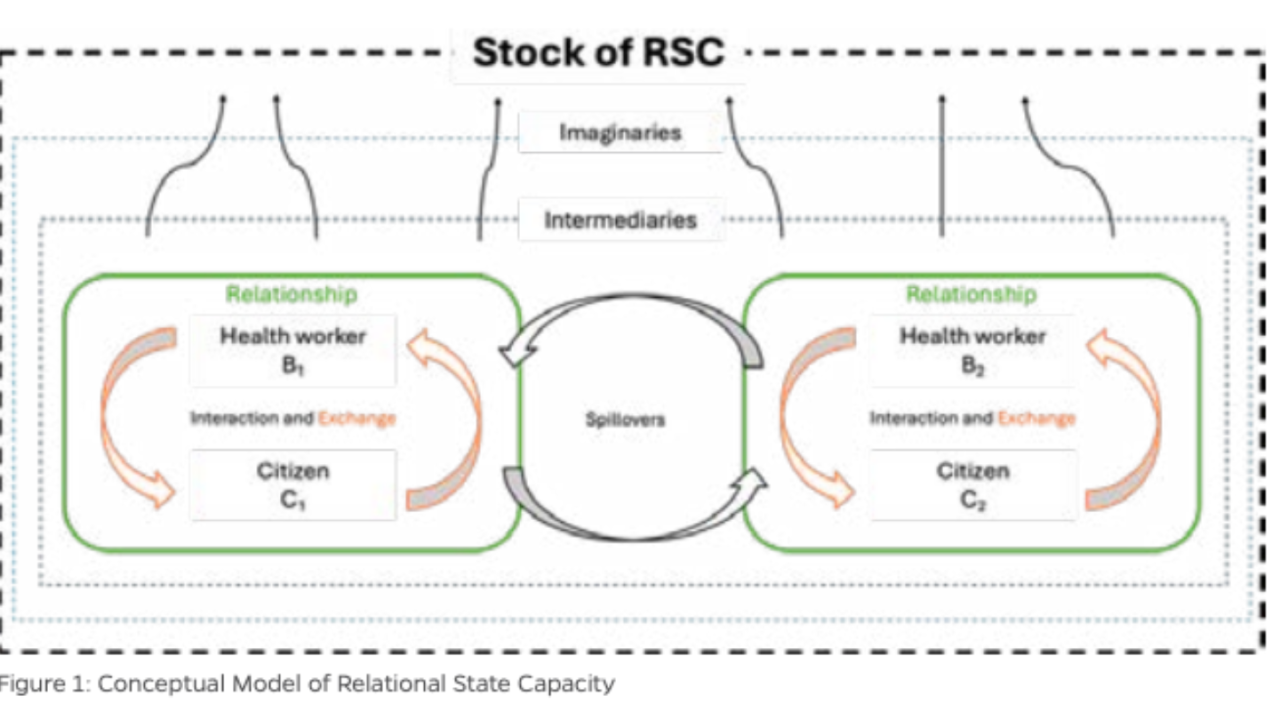
- Relationships between citizens and state agents are part of state capacity, as the Relational State Capacity paper argues.
- I plan to combine relationships and learning with power, incentives and actors’ behaviours, in a messy, adaptive way.
- The paper’s footnote on pockets of effectiveness offers a springboard for exploring how systems evolve.
About 4 minutes to read the full piece.
I’m very much looking forward to discussing Reflective Relational Practice - an approach which enables people and organizations to assess, inform and enhance the ways in which they relate to one another - with the reincarnation of USAID’s Local Systems Community on 8th May, and then at the Relational Public Services conference at Manchester Metropolitan University in early June. To join the call on the 8th May, see David Jacobstein’s comments below this piece.
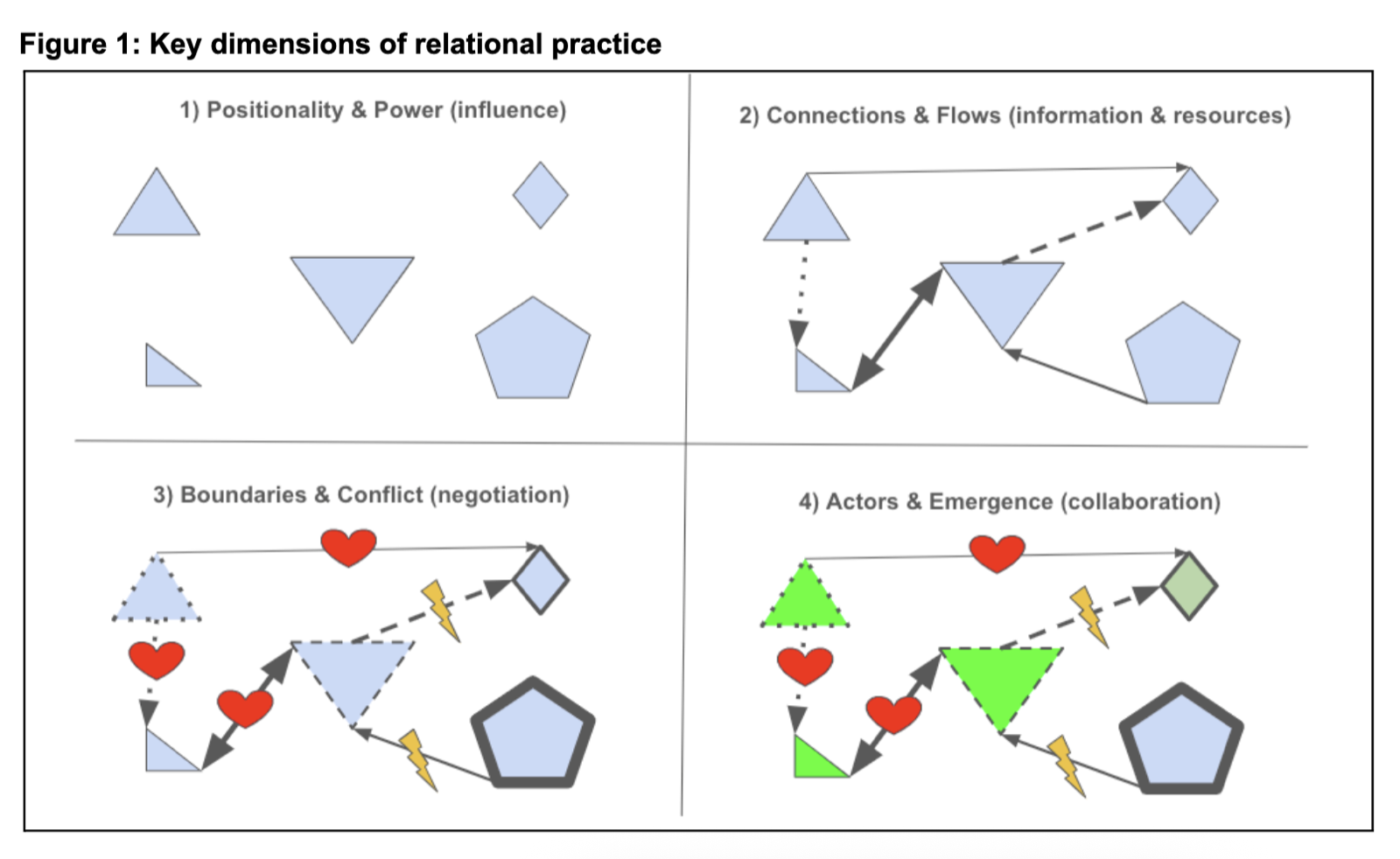
Figure from: Alan Hudson, Reflective Relational Practice
As well as being inspired by the people, organizations and publications listed in the references (including things by the Collective Change Lab, Human. Learning. Systems., The Relationships Project, and the School of System Change) my thinking about reflective relational practice overlaps with, and continues to be inspired by, the excellent paper on Relational State Capacity, by Dan Honig, Mekhala Krishnamurthy, and Rahul Karnamadakala Sharma.
As Dan, Mekhala and Rahul put it: “We are wrong—or at the very least, incomplete—in our mainstream conception of state capacity. Society’s ability to achieve ends is not just a function of the technical and institutional capacities of the state, such as the availability of physical infrastructure, money, skills, and personnel. The character and quality of human relationships between citizens and state agents are also an essential component of state capacity. We call this relational element of capacity relational state capacity. And once one starts to look for it, it appears to have been hiding in plain sight.” (p.3)
My thinking about reflective relational practice and how that might contribute to enhancing the dynamics of complex social systems is also informed by my engagement, alongside Kathy Bain, with Mushtaq Khan, Pallavi Roy and Duncan Edwards at the Anti-Corruption Evidence (ACE) Research Consortium - SOAS, on navigating the political economy of corruption.
For a taste of that, here’s the Executive Summary of the forthcoming “How to Guide”, that Kathy and I have developed, and - below, thanks to Liddy Greenaway - a diagram of a system of corruption which summarizes the search for entry points for systems change in a landscape of power and incentives, where observing patterns of behaviour and relational dynamics informed the design of policies might be able to encourage sustainable changes in behaviour even in a landscape where many powerful players benefited from, and preferred, the status quo.
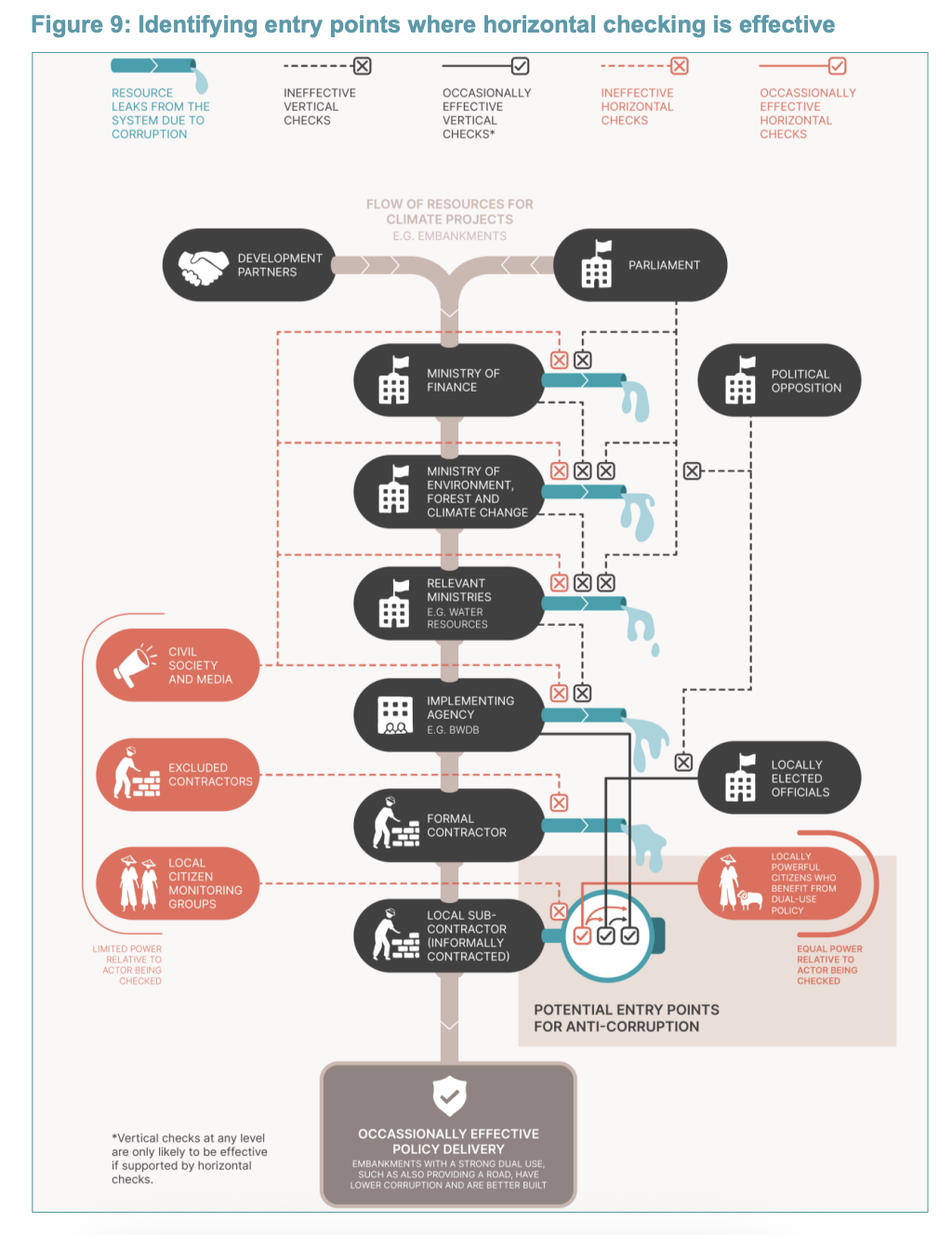
Figure from: SOAS-ACE (forthcoming) - Navigating the political economy of corruption
Over the coming months, I have a (somewhat messy, suitably adaptive … ) plan to combine the focus on relationships and learning from my note on reflective relational practice, with the focus on power, incentives and actors’ behaviours from my work with Kathy Bain and colleagues at SOAS-ACE. I’m looking forward to those explorations and will be happy to connect with others exploring similar terrain.
For now, in case useful for others, here are my highlights and notes on the Relational State Capacity paper by Dan, Mekhala and Rahul. Footnote 11 of that paper is especially rich - as reflected in David Jacobstein’s highlight of it and commentary on it. This provides an excellent springboard for further explorations about the dynamics of complex social systems, and the mix of power, incentives, behaviour, relationships, learning and more that shapes their evolution, and the outcomes that emerge from their workings.
- Dan, Mekhala, Rahul: “A perhaps parallel phenomenon can be seen in the albeit smaller body of literature on “pockets of effectiveness” in public administration—limited parts of states that function particularly effectively. Where these pockets of effectiveness flourish, it is often because of positive deviants in terms of relational state capacity. At the very least, these pockets often thrive because of different sorts of relationships among state agents (McDonnell 2020; Hickey 2019). But they also thrive because of stronger RSC, with different relationships between state agents and citizens (e.g., Tendler and Freedheim 1994). Where generalized relational state capacity was higher, we would see fewer of these pockets, or perhaps none at all. RSC does not so much “diffuse” from some central core as “propagate” throughout a network. In some sense, making RSC legible is an attempt to take the “pocket” and make it the full “garment.” ” (footnote 11, p.14, Relational State Capacity)
- David: Finally, I have to call out the incredible footnote on page 14 on how “pockets of effectiveness” or positive deviants both often rely on relational capacity to overcome circumstances, and more directly, how calls for “co-creation” or co-production processes diffuse when those become normal ways for things to operate, a shifted state of capacity more broadly. I think this is very useful to frame the value of temporary facilitation support not as introducing specific processes to be replicated, but rather using them to nurture stronger webs of connection that enable and inspire more routine ways of working with and through relational ties across institutions. This agenda reframes much of the work of good governance in ways that bring agency and context to the fore, highlighting both different reasons that things have “worked” or “failed” and a different way to gauge how things are going and whether reform efforts are contributing meaningfully to state capacity.(p.3 of What we’re reading, April 2025)
First published on LinkedIn, 29 April 2025.
Themes: Nurturing relationships and building community, Power, corruption and political economy
Topics: relational practice, power, corruption, political economy