Part 2 of 6 in a series, Complexity, corruption and change (July–August 2025).
← Previous: Learning from the political economy of positive deviance · Next: Identifying entry points in systems of transnational corruption →
“If you can learn to listen carefully, you find that systems speak. Not in words, but in patterns and anomalies: beacons that light up the places where an experiment or intervention can teach us more.” (Jen Briselli, Letter to a young systems thinker; my summarized highlights here).
A couple of days ago, I shared an introduction to a series of pieces about learning from the political economy of positive deviance. In this instalment, I outline one of the steps in my recent journey; my collaboration with Mushtaq Khan, Pallavi Roy, Duncan Edwards and Kathy Bain to produce navigating the political economy of corruption (See here for my slides from the launch event in May).
This resource - a “how to guide” - outlines the SOAS-ACE approach to informing the design of policies that have a chance of being implemented effectively in places where corruption is pervasive, because they are informed by an understanding of what drives actors’ behaviours. The guide also illustrates the application of the approach through two detailed case studies from Bangladesh and Nigeria. These case studies and associated diagrams (thanks to Liddy Greenaway) walk through the SOAS-ACE approach to understanding and addressing policy-distorting corruption.
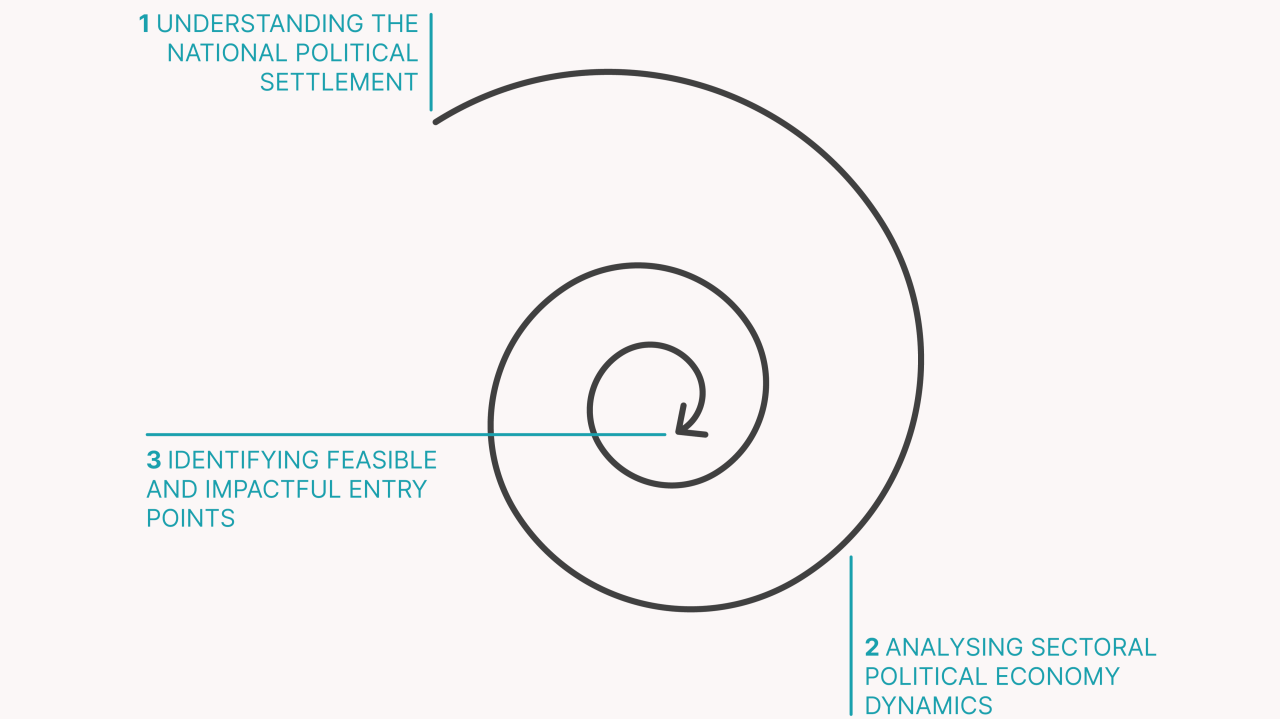
Central to the approach is an iterative process of identifying sites in systems of corruption where some positively deviant actors are not diverting public resources for their own benefit and are actively discouraging such behaviour by other actors. These are the feasible and impactful entry points referred to at the top of this piece. Or, if such sites of positive deviance cannot be found, identifying sites where such behaviour does not currently exist, but might be enabled; as exemplified by the Nigeria case study in the how to guide (more on SOAS-ACE’s Nigeria research here).
SOAS-ACE refer to this active discouragement as “horizontal checking”. That is, peer monitoring of rule-breakers by actors who are following the rules, which - if the actors who engage in peer monitoring have sufficient power relative to the rule-breakers - enhances accountability in this way, rather than through formal, hierarchical relationships, shaping actors’ behaviours, relationships and the dynamics of the system.
So, in the Bangladesh example, while corrupt actors would often divert resources from publicly funded climate adaptation projects for their own private benefit, when these projects had dual uses - flood protection embankments doubling as roads for transporting goods to market, for example - small landholders and petty traders with goods to sell would actively support the effective use of public resources to construct the embankment/roads. The fact that these actors were relatively wealthy and powerful players in their communities meant that they could also put pressure on other actors in their community to ensure that resources for these projects were not diverted for private gain. (Figure 1 shows a multi-level map of the system, the actors, relationships and resource flows, and illustrates the process of identifying suitable entry points for efforts to address corruption; places where there are signs that horizontal checking is taking place, shaping behaviours in ways that limit the leakage of resources).
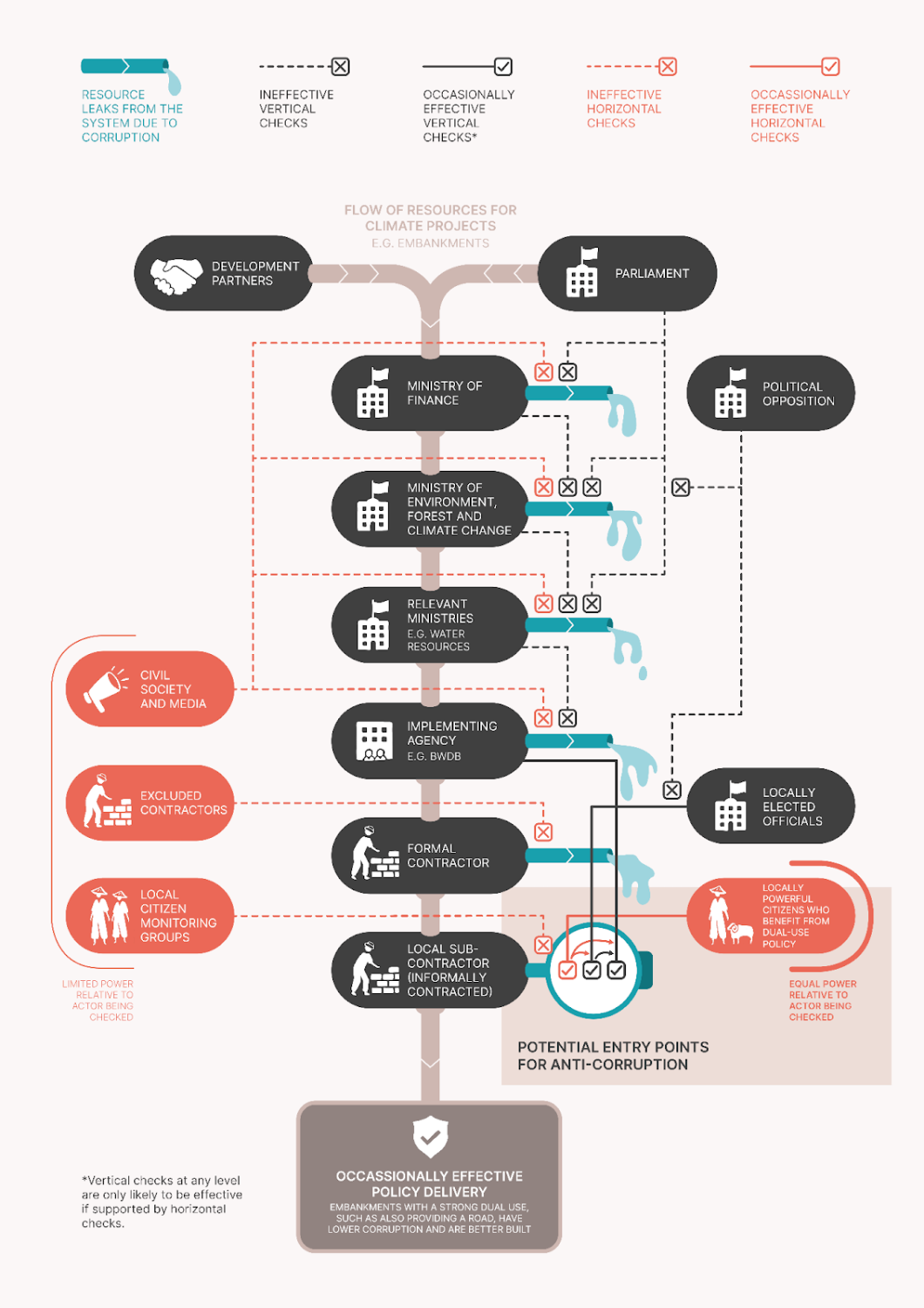
Figure 1: Mapping the system to find suitable entry points
A policy which required climate adaptation projects to have dual-use characteristics, particularly a policy that allowed communities to choose the location of the projects, had the potential to (indirectly) address corruption by harnessing the power of actors who - acting in their own interests - wanted the road/embankments to be constructed effectively. Figure 2, compares the results of two situations. One, on the left, where projects have strong dual-use characteristics, and resource leakages are limited. The other, on the right, where projects have weak dual-use characteristics, and resource leakages continue.
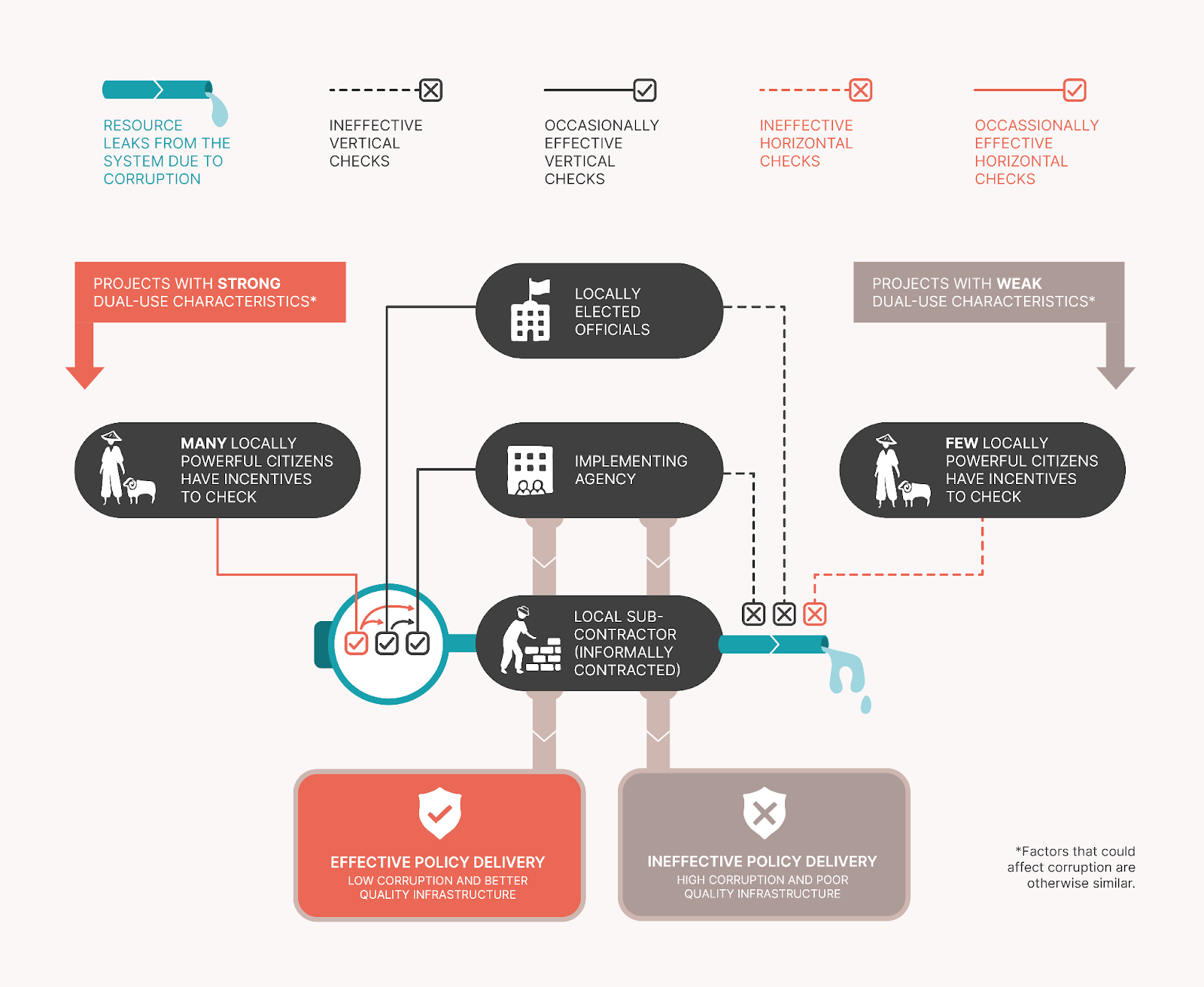
Figure 2: Designing a policy proposal to encourage dual-use characteristics
More broadly, if policies to address corruption are informed by and aligned with the prevailing configuration of actors’ power and interests, and incentivize changes in behaviour, they can shift the dynamics of the system, in ways that might incrementally reshape that configuration. In effect, this is about meeting systems, and actors, where they are - working with the grain - to more effectively engage with them and shift their behaviours and dynamics. Or, as Jen Briselli puts it in her insightful letter to a young systems thinker, it’s about “sensing where the system is malleable, where small shifts might propagate meaningful change”.
The process of developing this guide, working closely with Kathy, Mushtaq, Pallavi and Duncan, has taken quite a bit of time. This was in part because following the “Monsoon Revolution” in Bangladesh, Mushtaq’s energies were focused on supporting efforts to take advantage of the window for reform that unexpectedly opened up. It was also because the SOAS-ACE approach operates at multiple levels, in an iterative manner, with a number of closely integrated elements. This makes for an approach which is aligned with the complex nature of the challenges it is designed to address, but which can also be rather challenging to get your head around. We hope that the guide, along with this Notebook LM that you can chat with, and the video of the launch event, are helpful in that regard.
The time spent trying to outline the SOAS-ACE approach in accessible ways gave me the space to reflect, and to eventually realize that at the core of the approach is a learning journey to support navigation in a complex landscape. The journey, which might be thought of as addressing “what?”, “so what?” and “now what?” questions in turn, involves:
- Observing patterns of behaviour around a flow of policy resources to identify instances and sites of positively deviant behaviour and associated pockets of effectiveness in systems of corruption, where some actors are not diverting resources for private gain, and there is evidence of effective horizontal checking (What?);
- Analyzing and understanding how those patterns of positively deviant behaviour are shaped by the characteristics of the actors (their relative power, capabilities and interests in SOAS-ACE terms), operating in a contextual landscape of power, incentives and institutions (So what?) ; and
- Leveraging that understanding to inform the design of policies that might incentivize enough changes in behaviour, by sufficiently powerful actors, to enable those policies to be implemented effectively, amplifying and extending the positively deviant behaviour beyond the contexts where it was initially found, or, enabling it (the Nigeria case study) in instances when it could not be found (Now what?).
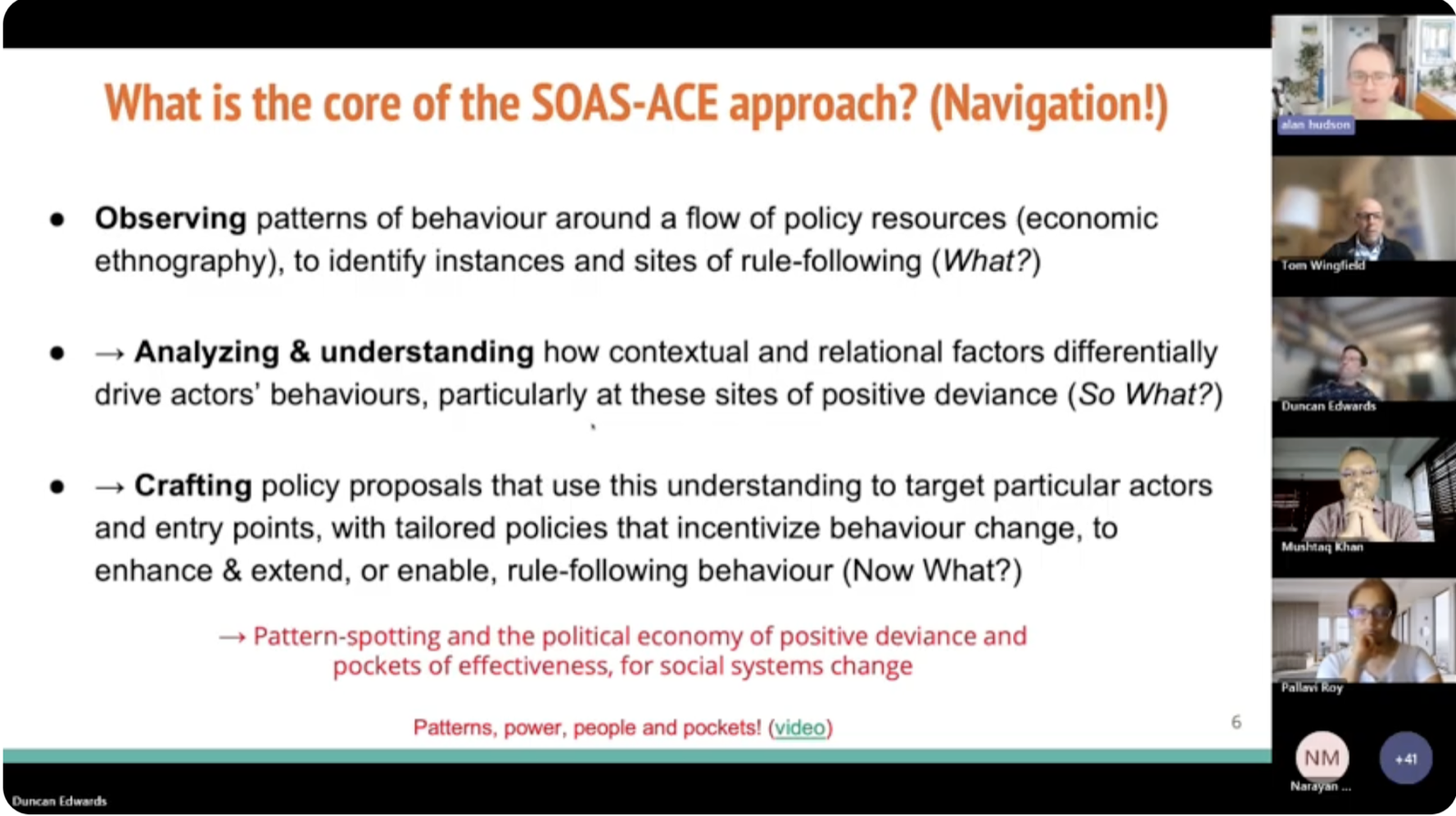
My distillation of the SOAS-ACE approach, from the opening minutes of the launch event video
There’s a full list of references and a richly annotated bibliography for those keen to dive deeper. Watch this space over the coming days as I walk through the following steps of the journey I’ve been on. Next up, reflections from my conversations with Søren Haldrup at UNDP about tackling transnational corruption systemically, and the process of identifying entry points in such systems. In the meantime, you might want to reflect on how the work you do takes account of, and tries to engage with, the landscape of power and incentives which shapes actors’ behaviours, the dynamics of social systems, and the outcomes that emerge. Share your reflections in the comments so we can learn along together!
First published on LinkedIn, 23 July 2025.
Theme: Power, corruption and political economy
Topics: corruption, political economy, entry points and leverage points