Summary: Zahed Yousuf and I co-wrote this to set out the common ground for an inquiry we are starting into how systems change, and how we can tell when they are changing. It may help anyone working on governance, peacebuilding, systemic investing, market systems or regenerative agriculture who wants to take the politics of change seriously.
- Complex social systems change through the interplay of actors’ behaviours and the regulatory landscapes they inhabit: habits shape habitats shape habits.
- Observing behaviour, and making sense of it with the actors involved, builds collaborative political intelligence that deepens through rounds of action.
- We ask how practitioners in five thematic areas take account of these dynamics, and invite them to get in touch.
About 6 minutes to read the full piece.
Co-written with Zahed Yousuf and first published on his Substack, Zahed@Dialectiq, on 27 October 2026.
How do we know when a complex system is actually changing?
Policies may shift, new initiatives may launch and organisations may report progress, while the underlying patterns of behaviour, power and relationships remain much the same. At other times, small changes in behaviour can signal that something more significant is beginning to move.
This inquiry starts from that tension. We are exploring how observing behaviour, understanding the landscapes that shape it, interpreting what is changing collectively, and learning through action can generate better political intelligence about how systems evolve.
This article sets out the common ground for that inquiry: the ideas we are starting with, the questions we will ask, and how we plan to explore them across areas including governance, peacebuilding, systemic investing, market systems and regenerative agriculture.
Our common ground is based on two key ideas.
Alan’s work on regulatory landscaping and Zahed’s work on collaborative political intelligence both focus on the relational and political economy dynamics of complex processes of social change, deepening understanding of how changes are playing out in order to inform better decisions and more effective action. Over the last few months, we have been exploring how our respective approaches complement each other.
The first idea is that complex social systems change through the co-evolutionary interplay between actors’ behaviours and the regulatory landscapes they inhabit: habits shape habitats shape habits. The second is that observing behaviours and making sense of them with the actors involved generates intelligence that can inform action and deepen through successive rounds of action and sense-making.
We plan to explore how others working to support social change in different thematic areas take account of the relational and political economy dynamics of such change. We hope to learn about their practices and about the potential value of the approach we are developing to understanding systems and sensing how they move.
How change happens
In complex social systems, change happens when actors behave differently within the environments – or regulatory landscapes – that they inhabit and bring to life. By regulatory landscape we mean the rules, incentives, norms, institutions and relationships, formal and informal, that shape actors’ behaviours. That is why we hold the two together: looking at behaviour on its own risks missing the landscape or context that shapes it, and looking at the landscape on its own risks missing how people actually behave within it.
Supporting change therefore requires an understanding of which elements of the regulatory landscape shape actors’ behaviours around a particular challenge and in a particular context, and how. It also entails doing things that enable and encourage some actors to behave in ways that might influence others and trigger the emergence of self-reinforcing patterns of behaviour.
How intelligence is built
Behaviour is where change becomes visible. That makes observing actors’ behaviours, in and across a system, a valuable entry point for understanding the dynamics of that system. It can show which aspects of the regulatory landscape lead actors to behave in particular ways, and how the landscape might change. As Jen Briselli puts it, the task is “sensing where the system is malleable, where small shifts might propagate into meaningful change”.
In observing behaviour, we pay particular attention to how the interests of various actors, and the power asymmetries amongst them, actually play out: in the varying ability of different actors to block, delay, protect, convene, control information, redirect resources or influence others. And we look at how different elements of the regulatory landscape shape actors’ behaviours in practice.
Like many others working on complex and systemic challenges, we think that making sense of a system together with the actors involved is key. Our particular focus is on doing so around observed behaviour and the political economy dynamics it reveals. Making sense of behavioural observations in this way – along with the narratives they are part of – turns them into collaborative political intelligence: a shared understanding of the system’s dynamics, and of the actions that might shift them. It also strengthens the capability of the actors involved, individually and collectively, to make better decisions and take more effective action.
Because the political dynamics, relationships and incentives that shape behaviour are constantly shifting – the music and the dancing never stop – this cannot be a one-off exercise. It is a continuing cycle of observing, making sense, acting and seeing what changes.
What we plan to explore
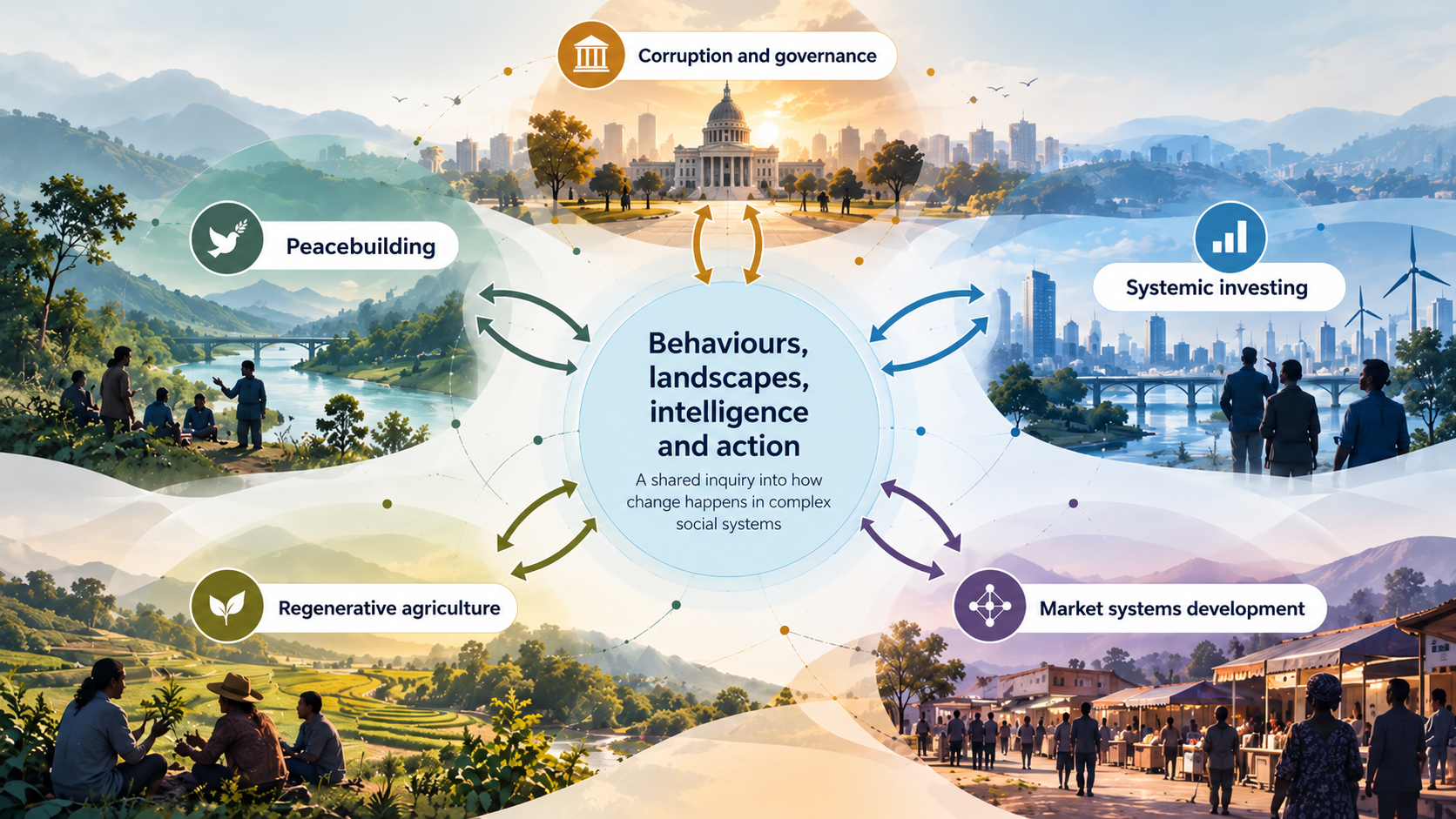
We are focusing on five thematic areas: corruption and governance, peacebuilding, systemic investing, market systems development and regenerative agriculture (see Figure 1). In each area, we are interested in:
- How practitioners think that change happens and whether the ways in which they operate are in line with that thinking.
- Whether and how their approaches to supporting social change take account of how different actors behave.
- Whether their approaches take account of the relational and political economy dynamics that shape those behaviours.
- Whether and how their approaches make those dynamics visible, using the intelligence that emerges through sense-making processes to identify opportunities, make decisions and take action that enables and encourages changes in behaviour.
These questions grow out of our own practice. In Zahed’s work on public financial management reform in the Democratic Republic of Congo, for example, rather than commissioning another political economy analysis, the programme brought together government officials, provincial actors, civil society organisations and technical advisers to make sense together of how the governance landscape was changing. Probes now being developed are designed to see how people respond, and why responses differ from one province to another, rather than to test whether an intervention “works”.
Exploring these questions will sharpen our own thinking. It will also help us see whether and how the approach we are developing could be tailored to support the work of practitioners in different thematic areas. If you work in one of these areas, or another where these questions seem worth asking, we would be glad to hear from you.
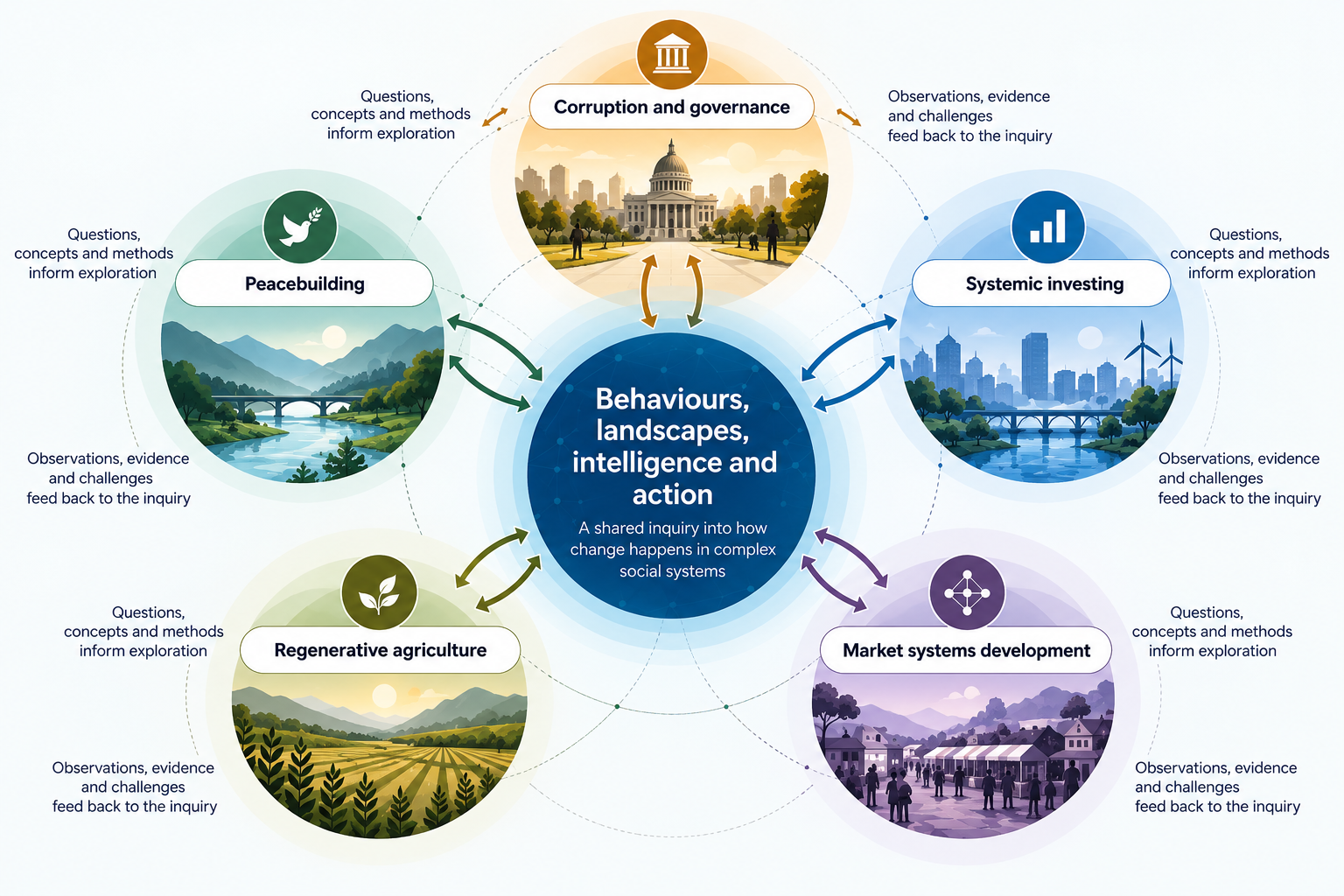
Figure 1: Explorations across thematic areas
Further reading: Alan’s note on regulatory landscaping, Zahed’s piece on collaborative political intelligence and our joint piece on how these two approaches complement each other.
First published on Zahed@Dialectiq, 27 October 2026.
Themes: Power, corruption and political economy, Learning systems and adaptive practice
Topics: regulatory landscaping, collaborative political intelligence, political economy, complexity, power, sensemaking, emergence, systemic investing, market systems