Human-led, not just a human in the loop
AI-supported research synthesis is a process through which I have drawn together findings from many sources on related themes, across different contexts, into a synthesis that is more than the sum of its parts while staying true to the diversity of what it is built on. AI helped me cover more ground, more effectively. But I designed, tested and refined the loops it worked within.
The process is sequential and iterative: the outputs of each stage become the inputs to the next, and are checked against what came before. That keeps a chain of integrity from the original sources to the final synthesis: a trust trail, rather than an audit trail. It draws on my knowledge gardening: gathering, cultivating, connecting and comparing ideas and evidence from multiple sources, then cooking them into something useful.
How it works
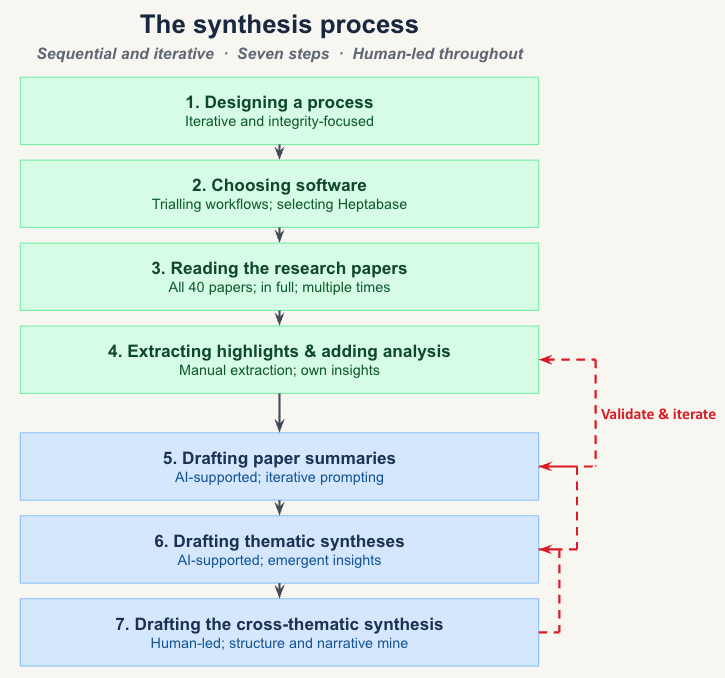
- Designing a process for the task: what material I’m working with, what kind of synthesis is needed and what steps will get there with integrity.
- Reading the sources in full, and returning to them, so that I can spot when the analysis goes off track.
- Extracting highlights and adding my own analysis: comments, questions and emerging insights, which drive everything that follows.
- Drafting with AI, one step at a time, such as summaries of each source and then syntheses by theme, using prompts refined through many iterations, and checking each output against what came before.
- Crafting the overall synthesis myself, calling on AI to test whether the narrative truly emerges from the material.
The diagram below shows the process I designed for the SOAS-ACE synthesis on corruption in health systems. A synthesis of other material would need its own process, designed for that task.
How this practice emerged
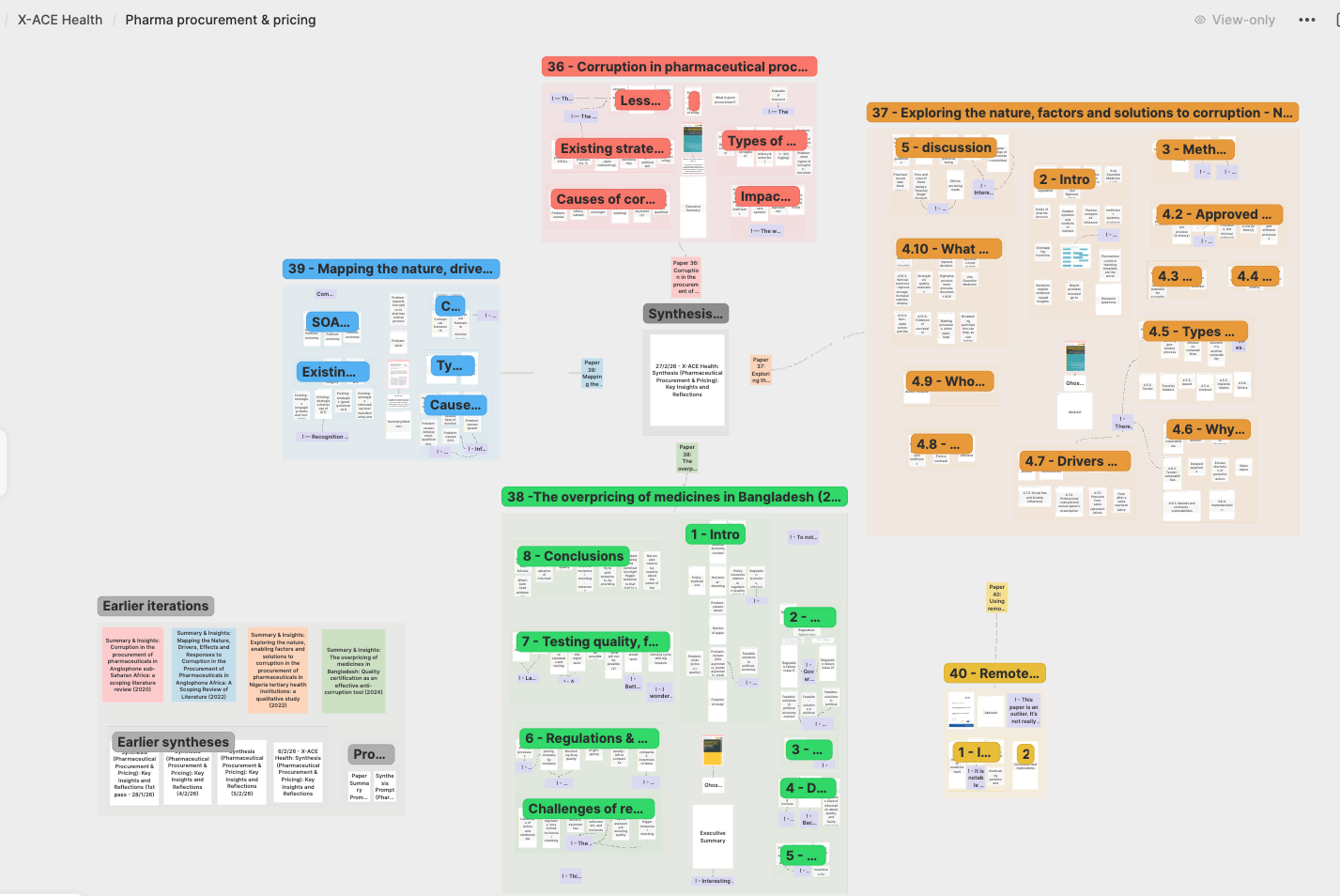
I developed this approach in early 2026, while synthesising forty research papers on corruption in health systems, from Bangladesh, Nigeria, Tanzania, Uganda and beyond, for the SOAS Anti-Corruption Evidence programme (SOAS-ACE). The same principles could be applied wherever there are multiple sources on related themes across different contexts.
Find out more
- A human and some loops: Crafting an AI-assisted synthesis on health systems corruption (May 2026)
- The SOAS-ACE synthesis report on corruption in health systems (PDF, March 2026)
Thinking of using AI for a synthesis of your own? Let’s connect.